Testing Are Required for Flexible PCB Manufacturing
As the world of electronics becomes more complex, the need for high-quality flex PCBs continues to grow. But while flex circuits offer numerous advantages, their thin form factor and flexibility can also introduce unique challenges during the manufacturing process. As a result, it is important to utilize advanced testing methods when producing these products to ensure that they meet all quality standards.
PCB testing has made significant advancements in recent years, with innovations such as flying probe tests that can detect hidden defects within dense and complex flex PCBs. These advances allow manufacturers to identify electrical faults more quickly, ensuring that only high-quality boards proceed to the next stage of production.
But not all flexible pcb manufacturing are the same, with some having more complex geometries that can make it difficult to access all test points. This can lead to undetected errors, which may then impact the performance of the finished product. This is why it is critical to use the right testing method for each individual flex PCB design, and to have a reliable system for comparing data across multiple tests.
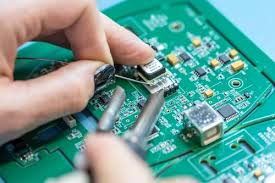
What Types of Testing Are Required for Flexible PCB Manufacturing?
The different types of testing required for flex PCBs include in-circuit testing (ICT), flying probe testing, automated optical inspection (AOI), and functional testing. Each of these methods has its own set of procedures that must be followed in order to obtain accurate and reliable results. In addition, it is necessary to regularly calibrate and maintain testing equipment to prevent inaccuracies that could compromise the quality of a product.
Flying probe testing is a fast and effective flex PCB inspection technique that uses movable probes to contact each of the individual electronic components on the board, measuring parameters such as resistance, capacitance, and continuity. It is a more affordable option than in-circuit testing, which requires a bed of nail testers with custom fixtures to contact each test point. However, it can be slower than other testing methods, so is best used for low-volume production or prototypes.
Other common flex PCB testing techniques include thermal imaging, which measures the temperature of the surface of a board and can help to detect defects that might not be obvious to the naked eye. This technique can also be used to measure the thickness of solder joints and other conductive paths on the board.
X-ray and other nondestructive flex PCB inspection methods are also available, which can provide a detailed look at the internal structure of a board without causing any damage. These methods can detect voids, misalignments, and other defects that might not be visible to other test systems. They can also be used to evaluate the wetting balance of solder, a crucial factor in the assembly process. Other specialized tests include peel testing, which measures the strength needed to remove lamination from a PCB, and solderability testing, which assesses how well the material adheres to the components.