circuit board assembly vary between industries
Circuit board assembly, though a fundamental process in electronics manufacturing, varies significantly across different industries due to distinct requirements, standards, and applications. Whether it’s for consumer electronics, automotive systems, medical devices, or aerospace applications, circuit board assembly techniques and practices are tailored to meet the specific needs and regulations of each industry. Here’s a closer look at how circuit board assembly varies between industries:
In the consumer electronics industry, circuit board assembly often emphasizes cost-efficiency, high-volume production, and rapid time-to-market. Consumer electronic devices, such as smartphones, tablets, and gaming consoles, require compact, lightweight circuit board assembly with high functionality and performance. Surface mount technology (SMT) is commonly used for its efficiency and scalability, allowing for the assembly of densely populated circuit boards with small form factors. Additionally, automated assembly processes are prevalent to meet the demand for mass-produced consumer electronics.
In contrast, the automotive industry has stringent requirements for reliability, durability, and safety in circuit board assembly. Automotive electronic systems, including engine control units, infotainment systems, and advanced driver-assistance systems (ADAS), must withstand harsh environmental conditions, temperature fluctuations, and vibration. Through-hole technology (THT) is often preferred for its robustness and solder joint strength, particularly in applications where mechanical stability is critical. Moreover, automotive circuit board assembly must comply with industry standards such as Automotive Electronics Council (AEC) guidelines for quality and reliability.
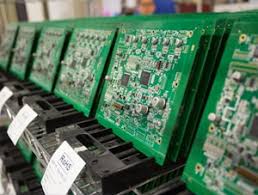
How does circuit board assembly vary between industries?
Similarly, the medical device industry places a premium on quality, precision, and regulatory compliance in circuit board assembly. Medical devices, such as pacemakers, defibrillators, and diagnostic equipment, require high-reliability circuit boards with strict adherence to safety and performance standards. Cleanroom manufacturing environments are often employed to prevent contamination and ensure product sterility. Additionally, specialized coatings and materials may be used to enhance biocompatibility and mitigate the risk of adverse reactions in medical applications.
In the aerospace and defense industry, circuit board assembly must meet stringent requirements for reliability, performance, and ruggedness in extreme environments. Aerospace electronic systems, such as avionics, navigation systems, and communication equipment, must operate flawlessly under conditions of high altitude, temperature extremes, and electromagnetic interference (EMI). Conformal coating and potting may be used to protect circuit boards from moisture, vibration, and radiation. Furthermore, circuit board assembly processes must comply with aerospace standards such as MIL-STD-883 for quality and reliability.
Moreover, industries such as telecommunications, industrial automation, and energy require specialized circuit board assembly techniques tailored to their unique applications and operating environments. Telecommunications equipment, for instance, demands high-speed data transmission, signal integrity, and network reliability, driving the adoption of advanced assembly techniques such as controlled impedance routing and optical interconnects. Industrial automation systems require robust, industrial-grade circuit boards capable of withstanding harsh conditions in manufacturing environments. Energy applications, including renewable energy systems and power distribution, may require circuit boards optimized for high-power handling, efficiency, and thermal management.
In conclusion, circuit board assembly varies significantly between industries, reflecting the diverse requirements, standards, and applications of electronic systems across different sectors. Whether it’s for consumer electronics, automotive systems, medical devices, aerospace applications, or industrial automation, circuit board assembly techniques are tailored to meet the specific needs of each industry, ensuring reliability, performance, and regulatory compliance in electronic products and systems.