Flex PCBs Impact Overall
A flexible printed circuit board (FPC) is a type of PCB that’s designed with the ability to bend. This gives it better resistance to vibrations and movement than traditional rigid circuit boards, which makes it ideal for a variety of applications. It also allows for more space in the overall design and can fit into shapes that are difficult or impossible with more rigid designs.
As a result, flex PCBs can help designers reduce overall product weight and size while maintaining performance and functionality. However, they still need to be careful to ensure that the flexed portions are well-made to avoid damage and malfunctions. To do so, they must adhere to the guidelines established by industry standards organizations like IPC.
To minimize costs, manufacturers must carefully choose the materials that will go into a flex pcb. For example, FR-4 PCBs have glass reinforcement that provides stability and mechanical strength. The base layer for a flex circuit is often polyimide, also known by the brand name Kapton. This material is much thinner than FR-4 and has similar flexibility properties. Moreover, it is also less expensive.
When choosing the right copper film for your flex circuit, you should consider its thickness, conductivity, and durability. For example, a thinner copper film has lower conductivity and may be more vulnerable to corrosion, while a thicker one offers better flexibility and reliability. Furthermore, you should consider whether your flex circuit needs plated through hole vias or buried ones. While buried vias offer improved impedance control and higher speeds, they require more drilling, plating, and lamination than plated through holes.
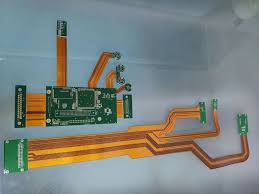
How Do Flex PCBs Impact Overall Product Weight and Size?
In addition to these material considerations, you should also think about how many layers your flex PCB has and the type of surface finish it uses. Surface finishes such as tin and soft gold provide a solderable surface and prevent copper oxidation. On the other hand, a high-density flex PCB requires more layers and will cost more to produce. It also needs to be pre-baked to stop blistering and moisture absorption during the lamination process.
Flex PCBs can be assembled using a variety of techniques, including soldering, wire bonding, and molding. These processes are usually performed by an automated robot system to ensure consistency and quality. This helps to ensure that the components are properly placed and the traces have the correct length and width. It also helps to reduce assembly errors.
Rigid-flex PCBs are a great choice for automotive, aerospace, and consumer electronics applications because they provide space allocation and thermal performance. They are especially useful in vehicles because they can take on unusual shapes and handle the stress of vibrations and movements. In addition, they can accommodate a wide range of temperature conditions. To ensure that these boards are reliable, it is important to test them regularly. In particular, you should test for cracking, bending, and thermal performance. You can also use a conductive ink to detect defects such as voids and shorting.