Designing Circuits for Rigid Flex Circuit Boards
Rigid flex circuit boards are used in a wide range of applications, from wearable electronics to medical devices. These circuits offer greater durability than rigid PCBs, as they can withstand repeated flexing and bending without compromising performance. However, the flexibility of these circuits comes with some challenges that designers must be aware of.
Incorrectly designed rigid flex circuits can result in failure, which could pose serious safety hazards for users or equipment. This is especially true for critical applications like medical devices or aerospace equipment. Poor-quality rigid flex PCBs may fail due to stress fractures, high EMI levels, or open and short circuits. The use of subpar rigid flex circuits in such applications can result in significant liability and reputation damage for the manufacturer, designer, or fabricator and may lead to costly downtime.
Designing rigid flex circuit boards is different from designing circuits for other types of PCBs. This is because these circuits must take into account a number of unique mechanical and electrical factors, including varying layers, higher copper weights, thinner trace widths and spacing, and differing material CTEs.
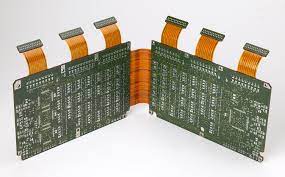
Challenges of Designing Circuits for Rigid Flex Circuit Boards
For example, routing rigid flex circuits requires wider traces and tighter space between them than would be required in a traditional PCB, but they also allow for much more complex bends. These considerations require thorough and careful planning to ensure that the rigid flex circuits are engineered for maximum durability and reliability.
Other factors to consider include minimizing impedance discontinuities to maintain signal integrity in flexible sections, as well as ensuring proper connection between the rigid and flex portions of the circuit. In addition, connector placement and layer transition can impact signal quality, causing impedance mismatches and signal loss.
Using the right materials is also important in designing rigid flex circuits. For example, acrylic adhesives used in flexible coverlayers and bondplies can cause via failure by putting excessive stress on the plated through holes. High-reliability rigid flex boards use techniques like cut back coverlayers and no flow prepregs to reduce this risk.
Finally, rigid flex circuits must be designed to accommodate varying thermal expansion rates of the rigid and flex sections. Failure to account for these differences can lead to mechanical failure, signal distortion, and impedance mismatches.
With the right planning and design, rigid flex circuits can be used in a variety of applications, from consumer electronics to medical devices and aerospace equipment. The use of high-quality rigid flex PCBs can help manufacturers, designers, and fabricators improve their reliability and efficiency while reducing their costs. To learn more about the benefits of working with rigid flex, contact Valor NPI today. Our team of experts can answer any questions you may have and help you get started with your next project. We look forward to partnering with you!