How Does Flex PCB Fabrication Affect Heat Dissipation?
In the world of electronics, heat management is a critical consideration for maintaining the reliability and performance of devices. Heat dissipation is particularly important in high-density circuits, where excessive heat can lead to component failure, reduced efficiency, and ultimately, shorter device lifespans. Flex PCB fabrication plays a crucial role in heat dissipation, and understanding its impact is essential for designing circuits that can operate effectively even in thermally demanding environments.
1. Material Choices for Heat Management
One of the most important factors in flex PCB fabrication that affects heat dissipation is the choice of materials used for the PCB’s substrate and conductive layers. Flexible PCBs are often made with materials like polyimide, which is known for its excellent thermal stability and high heat resistance. Polyimide allows flex PCBs to operate in higher temperature environments compared to standard materials used in rigid PCBs. In addition to the base material, copper, which is commonly used for the conductive traces on flex PCBs, is an excellent thermal conductor. When these materials are carefully selected during the fabrication process, the overall ability of the PCB to dissipate heat can be optimized.
However, because flex PCBs are often thinner than traditional rigid PCBs, the thermal conductivity of the entire system can be affected. The thinner the substrate, the less efficient the heat dissipation, meaning that managing heat flow requires careful design considerations to ensure that the thermal load is properly distributed.
2. Thermal Conductivity of Flex PCBs
The flex pcb fabrication process typically uses substrates that are more flexible but may have lower thermal conductivity than rigid PCBs. This could potentially hinder the efficient transfer of heat away from critical components. In traditional rigid PCBs, metal core PCBs (MCPCBs) are often used to aid heat dissipation because the metal core acts as a heat sink. In flex PCBs, while a metal core can still be used, it requires careful integration and design to ensure that the flexible nature of the circuit board is not compromised.
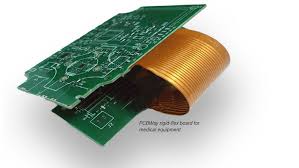
In some advanced flex PCB fabrication techniques, manufacturers incorporate heat sinks or use thermal vias to enhance the flow of heat away from heat-sensitive components. These features help direct heat to the PCB’s outer surface or to areas where it can be dissipated more effectively. However, the flexibility of the PCB must be preserved, which requires careful balancing of the thermal management features with the need for a flexible, bendable design.
3. Design for Thermal Management
Effective thermal management in flex PCB fabrication often involves optimizing the layout and design of the PCB itself. For example, designers can place heat-sensitive components away from heat-generating components, reducing the risk of excessive heat buildup. In high-power applications, components such as processors, LEDs, or power transistors may generate significant heat. In such cases, thermal vias, which are small holes filled with conductive material, can be incorporated into the design. These vias help channel heat away from the components and into the PCB’s thermal management system.
Additionally, multi-layer flex PCBs can be used to improve heat dissipation. By stacking multiple layers of flexible material, designers can create heat pathways that distribute heat more effectively. The outer layers of the PCB can be engineered to act as heat sinks, further improving the thermal dissipation of the overall system. This approach is particularly beneficial in applications that require both flexibility and effective thermal management.
4. The Role of Flexibility in Heat Management
One of the unique challenges of flex PCB fabrication is maintaining the balance between flexibility and effective heat dissipation. While flex PCBs are designed to bend and fit into small, complex spaces, they also need to address thermal management concerns. The flexible nature of these PCBs can limit the available area for heat dissipation. In rigid PCBs, the surface area is fixed, and heat can be spread across a larger area more easily. In flex PCBs, however, the smaller surface area and the thin profile can make heat dissipation more challenging.
To address this challenge, designers must optimize the layout to allow for better airflow and use specialized materials or coatings that can enhance thermal conductivity. Additionally, incorporating flexible heat sinks or embedding heat-dissipating components directly into the flex PCB can help mitigate thermal issues.
5. Applications and Industries Benefiting from Thermal Management in Flex PCBs
Effective heat dissipation is critical in industries where flex PCB fabrication is used, such as in medical devices, automotive systems, and wearable electronics. In these applications, compact and lightweight designs are necessary, but the products also need to operate in environments where heat generation is high. For instance, wearable devices like fitness trackers or smartwatches require flexible PCBs to fit seamlessly into small spaces while also ensuring that heat generated by the internal electronics does not cause the device to overheat.
In automotive systems, where PCBs are exposed to harsh conditions and high temperatures, proper thermal management is essential to ensure the longevity and reliability of the components. Similarly, in medical devices, flex PCB fabrication is used to create flexible, durable circuits that must operate reliably in temperature-sensitive environments.
Conclusion
In conclusion, heat dissipation is a crucial aspect of flex PCB fabrication, particularly when dealing with high-density, power-hungry circuits. Material selection, design optimization, and the integration of advanced thermal management features such as thermal vias and heat sinks are essential for ensuring that flex PCBs can effectively dissipate heat. While the flexibility of the PCB presents challenges in heat management, advances in fabrication techniques continue to offer solutions that maintain the flexibility of the circuit while ensuring reliable thermal performance. By addressing heat dissipation concerns during the design phase, manufacturers can ensure that flex PCBs perform efficiently and reliably across various applications.